

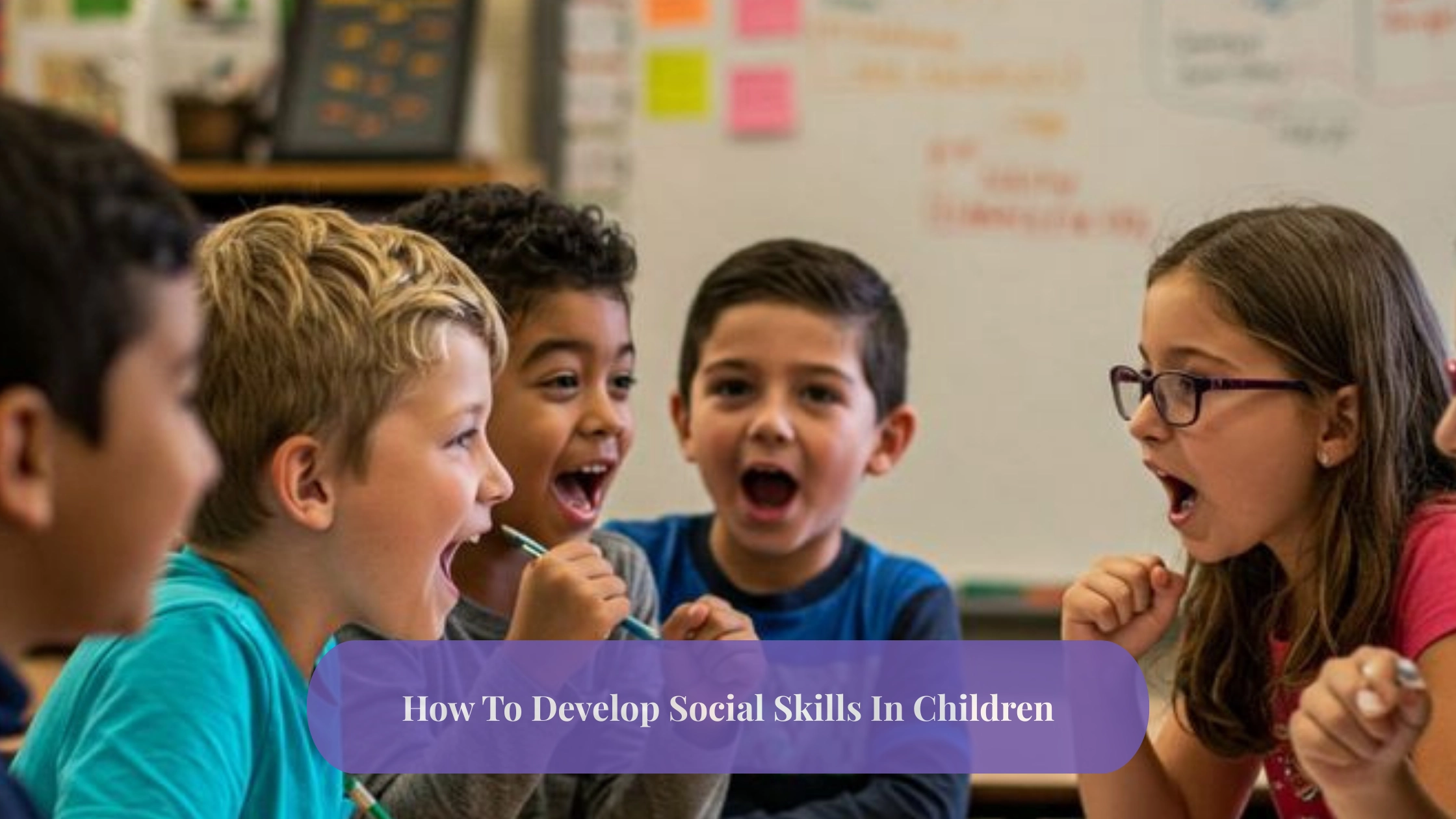
How To Develop Social Skills In Children involves intentionally teaching communication, empathy, cooperation, and emotional regulation through daily interactions at home and school. Children build strong social foundations when guided consistently by parents and educators, especially in structured environments like the Best preschool in Abu Dhabi, where peer interaction is part of everyday learning.
Why are social skills important for a child’s overall development?
Social skills shape how children build friendships, express emotions, and handle conflicts. Strong interpersonal abilities improve classroom participation, teamwork, and even academic performance. Children who communicate confidently are more likely to ask questions, seek help, and stay engaged in learning activities.
Research and classroom observations consistently show that early social competence predicts smoother transitions into formal schooling. When children feel socially secure, they adapt faster and show greater emotional stability.
How can parents model strong social behavior at home?
Children learn by observation. When parents demonstrate active listening, respectful conversation, and calm problem-solving, children mirror these behaviors. Daily habits such as family discussions during meals or collaborative activities strengthen connection and communication.
Encouraging open dialogue also aligns with 5 Ways to Build Toddler Communication Skills, such as expanding vocabulary naturally, asking open-ended questions, and validating emotions. These strategies enhance both language development and social confidence.
What role does preschool play in social skill development?
Structured peer interaction is essential. In a quality daycare in Abu Dhabi, children learn to share, take turns, and resolve small conflicts under teacher supervision. These guided experiences teach boundaries, empathy, and cooperation.
Similarly, a nurturing Nursery in Musaffah provides group activities that encourage teamwork through storytelling, role play, and collaborative games. These environments offer safe spaces where children practice social behaviors repeatedly until they become natural habits.
How can parents encourage empathy and cooperation?
Empathy grows when children understand others’ feelings. Parents can strengthen this skill by discussing emotions openly and asking reflective questions like, “How do you think your friend felt?” Role-playing different scenarios also helps children practice responses before facing real-life situations.
Cooperative activities at home such as cleaning up together or completing a simple puzzle reinforce teamwork. These small shared experiences teach patience and mutual respect.
Can motivation strategies improve social confidence?
Academic motivation and social development often overlap. Techniques discussed in 10 Effective Strategies to Motivate Your Kid to Study, such as positive reinforcement and achievable goal setting, also strengthen social behavior. When children feel capable academically, they participate more confidently in group settings.
Celebrating effort rather than perfection encourages resilience. Confident children are more willing to initiate conversations and engage with peers.
What practical daily habits support social growth?
Consistency matters. Encourage regular playdates, involve children in group activities, and maintain predictable routines. Praise respectful behavior immediately so children associate positive feedback with healthy interaction.
Developing social skills is not a one-time lesson but a continuous process supported by strong partnerships between parents and educators. When children receive consistent guidance at home and in preschool, they develop communication strength, empathy, and confidence that supports lifelong success.