

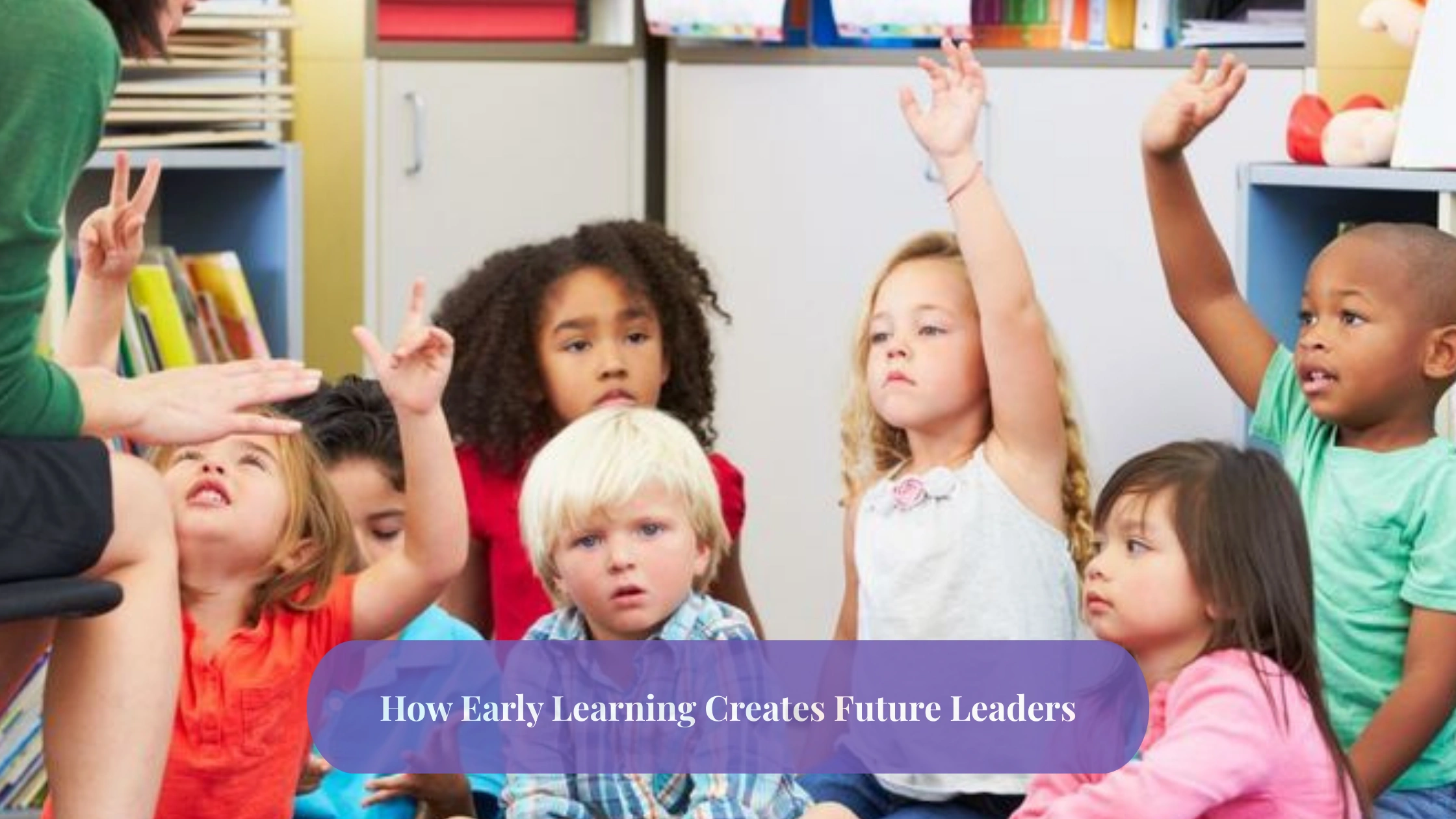
How Early Learning Creates Future Leaders is rooted in building confidence, communication, responsibility, and problem-solving skills during the formative preschool years. When children are guided in structured environments such as the Best preschool in Abu Dhabi, they develop the mindset, independence, and social intelligence that shape strong leadership qualities later in life.
Why does leadership development begin in early childhood?
Leadership is a skill that starts developing when children are in early elementary school; it actually begins before children become teenagers, if children make choices, such as choosing what they wear or expressing their opinions, then they are learning how to develop their own decision-making abilities.
In addition, daycare in Abu Dhabi have structured experiences that support the development of kids’ independent initiative and accountability by allowing them the opportunity to complete group projects, participate in directing classroom activities and work cooperatively with others.
Children who know they are respected and valued will share their ideas with confidence and take responsibility for their decisions later in life.
How does responsibility shape future leaders?
Understanding Why Teaching Responsibility Should Start Early Age is critical in leadership development. When children are given age-appropriate responsibilities—such as organizing materials, helping classmates, or completing simple tasks—they begin to understand ownership.
Having responsibility instills children with the discipline and trustworthiness necessary to be leaders. Leaders are not only confident; they also can be relied upon. Often, supportive environments like those of a Daycare in Musaffah promote responsible behavior as part of daily living (e.g., trust and consistency) in the realm of encouraging children to be leaders.
When kids learn that what they do can have an impact, they understand to appreciate what you have done rather than control everything around them.
What role does confidence play in early leadership growth?
Confidence is created through accomplishments and support. Children who are given opportunities to experience success, and are encouraged to keep trying even when they fail, will develop resilience. When confidence and resiliency are combined, they help build strong character.
Children who receive positive reinforcement while learning see increased self-confidence. For example, when a child sings with their classmates, or gives a presentation to their peer group, they will develop comfort with being in front of others. These experiences help eliminate some of the fear of public speaking and encourage children to take risks.
How do social skills influence leadership potential?
Strong leaders communicate effectively and understand others. That foundation is built through early social interaction. Exploring concepts related to How To Develop Social Skills in Children reveals that empathy, listening skills, and cooperation are learned behaviors—not natural traits.
Preschoolers learn many of the skills needed for leadership through repeated experiences with sharing, negotiating, and resolving problems with one another. Through these experiences, preschool-age children develop emotional regulation and cooperation with other children. Leadership is about influencing people; therefore, to influence someone, one needs to know him or her.
Kids who have the ability to work cooperatively generally become the lead group members of their peers when working together on projects or activities.
How can parents support leadership development at home?
The role of parents can help children develop guided independence. Provide opportunities for children to develop this independence through making small decisions, having input in family discussions and being able to solve small problems themselves before stepping in to help.
Expectations at home and in preschool provide consistency that will support a child’s personal development. Children can feel safe enough, when expectations are the same, to take appropriate risks and to exhibit leadership skills in the natural course of their development. Communication, responsibility, empathy and confidence are developed through children’s early experiences and serve as the foundation for their future leadership abilities.
Early learning is not just preparation for academics—it is preparation for character. When children are nurtured in environments that value responsibility, social intelligence, and independent thinking, they grow into capable individuals ready to lead with empathy and confidence.