

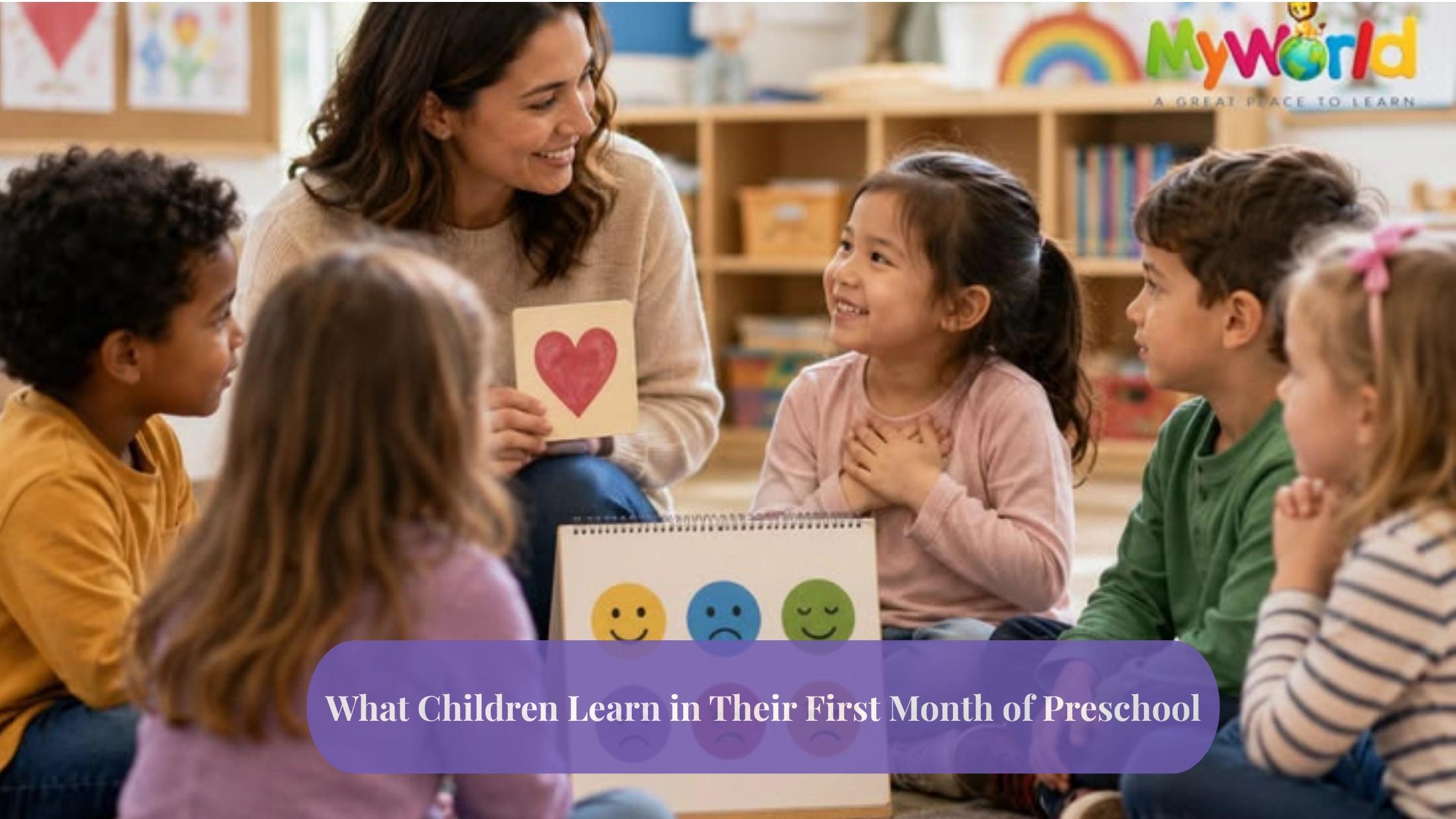
What Children Learn in Their First Month of Preschool goes beyond letters and numbers. During the first few weeks, children learn classroom routines, communication, sharing, independence, and emotional confidence. A supportive preschool in Abu Dhabi helps children gradually adjust to a new environment while developing the social and learning habits needed for future education.
1. What do children learn during their first few weeks?
How do children adjust to a new routine?
The first month is mainly about helping children feel comfortable and secure. They learn when to arrive, where to keep their belongings, how to follow classroom routines, and when to participate in different activities.
Teachers introduce routines gradually rather than expecting children to understand everything immediately. Repetition helps toddlers and preschoolers become familiar with their surroundings and feel more confident.
Why is routine important?
A predictable routine gives children a sense of security. Knowing what happens next can reduce anxiety and help them participate more comfortably in classroom activities.
2. How do children develop communication skills?
What do children learn through daily interaction?
Children spend time talking with teachers and classmates, listening to stories, singing songs, and participating in group activities. These experiences encourage them to express their needs, ask questions, listen to others, and learn new vocabulary.
At the best Preschool in Shabiya 9, age-appropriate conversations and group activities can help children gradually become more comfortable communicating outside their home environment.
How can parents support communication at home?
Parents can ask simple questions about the child’s day and encourage them to describe activities, people, or things they enjoyed. Giving children enough time to answer helps build confidence.
3. Do children learn social skills in the first month?
How do children learn to interact with others?
Preschool introduces children to a larger social environment. They begin learning how to share toys, take turns, wait patiently, cooperate during activities, and respect personal space.
These experiences may seem simple, but they are important foundations for developing friendships and positive classroom behavior.
Why is emotional development important?
Children may experience excitement, nervousness, or frustration during their first month. Teachers help them recognize and express these emotions appropriately while gradually becoming comfortable with new people and surroundings.
4. How does preschool encourage independence?
Which everyday skills do children develop?
Children are encouraged to complete simple age-appropriate tasks independently. They may learn to organize their belongings, wash their hands, tidy up after activities, and make small choices during play.
These experiences connect closely with Skills Children Need to Learn at an Early Age, particularly independence, communication, decision-making, and emotional awareness.
Why should children be allowed to try things themselves?
Allowing children to attempt tasks independently builds confidence. Teachers can provide guidance when necessary while giving children enough opportunity to experience small successes.
5. How does preschool recognize different learning styles?
Why doesn’t every child learn in the same way?
Some children respond strongly to pictures and demonstrations, while others learn through music, movement, conversation, or hands-on activities. Teachers observe these preferences during everyday classroom experiences.
Understanding Your Toddler’s Learning Style can help parents and educators create activities that match a child’s interests and developmental needs.
6. How does the first month prepare children for KG?
What happens as children become more comfortable?
As children settle into preschool routines, they become more prepared for structured learning. They gradually improve their ability to listen, follow instructions, participate in groups, complete simple tasks, and manage transitions.
These foundations are valuable when children later move into KG in MBZ, where classroom expectations and learning activities become more structured.
How can parents make the transition easier?
Parents can maintain consistent routines at home, encourage independent tasks, read regularly, and talk positively about school. Most importantly, children should be given time to adjust at their own pace.