

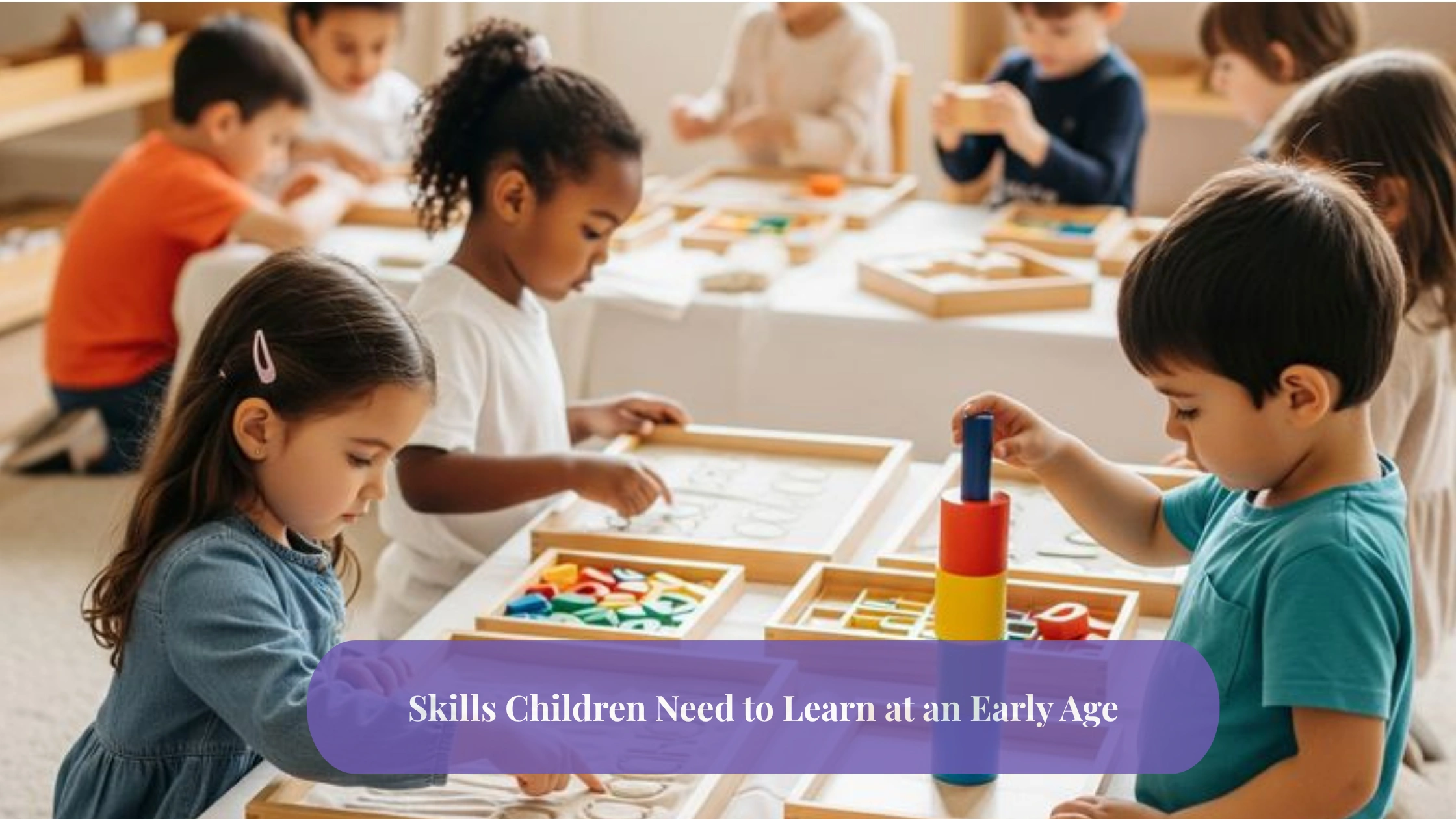
Skills Children Need to Learn at an Early Age include communication, problem-solving, emotional regulation, creativity, and independence. Enrolling children in the best preschool in Shabiya 9 provides a supportive environment where these essential life skills are developed through structured learning and meaningful play, preparing them for lifelong success.
1. Why are early life skills important for children?
How do life skills influence future learning?
The early years are a critical period for brain development. During this stage, children absorb new experiences quickly and begin forming habits that influence their confidence, relationships, and academic success.
Developing essential skills at an early age allows children to become independent learners who can adapt to new environments and solve everyday challenges with confidence.
Why should parents focus on overall development?
While learning letters and numbers is important, children also need opportunities to build emotional intelligence, communication, creativity, and social awareness. A balanced approach prepares them for success both inside and outside the classroom.
2. Which communication and social skills should children develop?
Why is communication important?
Children should learn how to express their thoughts, listen carefully, ask questions, and communicate respectfully with others. Strong communication skills help them build friendships and participate confidently in classroom activities.
A quality Nursery in Musaffah encourages children to interact through storytelling, group activities, role play, and collaborative learning experiences that strengthen these abilities naturally.
How do social skills benefit children?
Learning to share, cooperate, take turns, and respect others helps children develop positive relationships while improving teamwork and emotional understanding.
3. Why should children develop problem-solving skills early?
How does problem-solving build confidence?
Problem-solving teaches children to think independently, make decisions, and overcome challenges instead of giving up easily. Everyday activities such as puzzles, building blocks, and imaginative play encourage logical thinking.
Parents interested in How to Develop Problem-Solving Skills at Early Age should provide opportunities for children to explore, ask questions, and discover solutions through guided learning rather than giving immediate answers.
Why is curiosity important?
Curious children become active learners who enjoy discovering new ideas, making learning both enjoyable and meaningful.
4. How do independence and emotional skills prepare children for school?
Why is independence valuable?
Simple responsibilities such as packing a school bag, organizing toys, washing hands, and making small choices help children become more confident and responsible.
A nurturing KG school MBZ supports independence by encouraging children to complete age-appropriate tasks while providing guidance whenever needed.
How do emotional skills support learning?
Children who understand and manage their emotions adapt more easily to classroom routines, build stronger friendships, and respond positively to new experiences.
5. How do early learning habits shape future success?
Why are lifelong learning habits important?
Developing positive habits during early childhood creates a strong foundation for continuous learning. Reading daily, exploring new activities, asking questions, and practicing consistency help children develop curiosity and resilience.
This reflects Why Early Education Builds Lifelong Learning Habits, where early experiences encourage children to enjoy learning and remain motivated throughout their educational journey.
How can parents reinforce these skills at home?
Parents can support development by reading together, encouraging conversations, allowing children to solve simple problems independently, and celebrating effort instead of perfection.


3 comments
Pingback: How Preschool Activities Prepare Children for Real Life Situations
Pingback: How AI Is Changing Early Childhood Education
Pingback: Screen Time Limits for Kids by Age: A Parent's Guide