

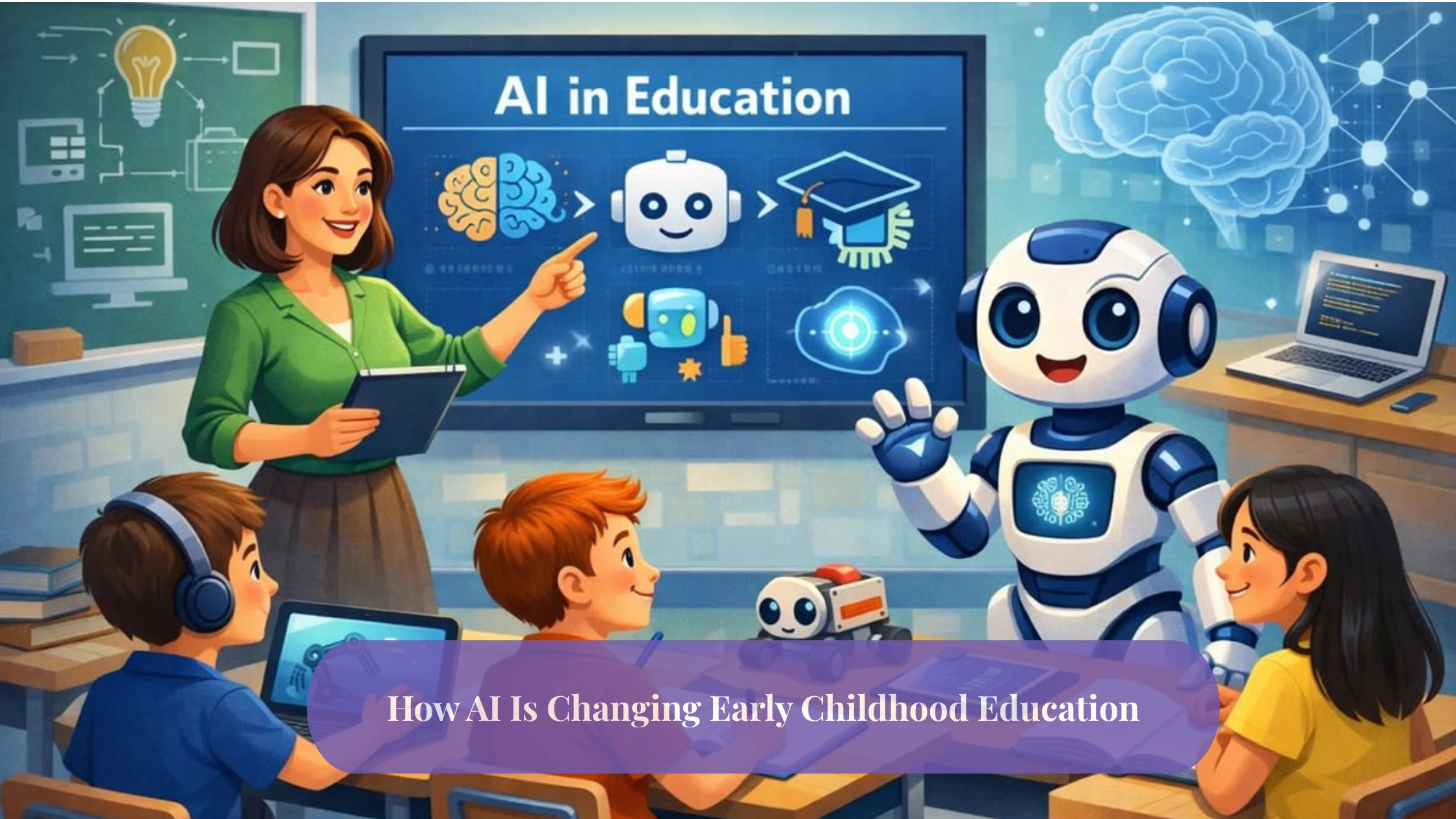
How AI Is Changing Early Childhood Education is less about giving young children more screen time and more about improving how educators teach, plan, observe, and personalise learning. In a Best Nursery In Mussafah, AI can support teachers with planning and learning insights while keeping play, human interaction, creativity, and emotional development at the centre.
How Is AI Being Used in Early Childhood Education?
Artificial intelligence is gradually becoming a support tool for educators rather than a replacement for teachers. In early childhood settings, its most useful role is behind the scenes, helping teachers organise information, prepare activities, identify learning patterns, and create more personalised experiences.
For example, AI-assisted tools can help educators generate age-appropriate activity ideas based on children’s interests or developmental needs. Teachers can then adapt these ideas according to their classroom experience and individual children.
The teacher remains responsible for understanding the child, making decisions, and creating meaningful human connections.
Can AI Personalise Learning for Young Children?
How Can Technology Support Individual Learning Needs?
Every child develops at a different pace. Some children may communicate confidently while others need more encouragement. Some may enjoy numbers and puzzles, while others respond better to stories, movement, or creative activities.
AI can help educators identify patterns in learning observations and organise information more efficiently. This can make it easier for teachers to understand where a child may need additional practice or encouragement.
For parents researching a Best Preschool in Abu Dhabi, it is worth asking how technology is being used. The important question is not whether a school uses AI, but whether technology actually improves the child’s learning experience.
Does AI Mean More Screen Time for Preschool Children?
Can Young Children Learn About AI Without Using Screens?
AI education does not necessarily mean placing a tablet or computer in front of a young child. Early AI awareness can be introduced through stories, puzzles, sorting games, pattern recognition, problem-solving activities, and conversations about how technology works.
Children can learn simple concepts such as recognising patterns, following sequences, making choices, and understanding that technology follows instructions.
A Preschool in Abu Dhabi can introduce these concepts through hands-on activities that encourage curiosity without replacing physical play or social interaction.
For young children, real-world experiences should remain more important than passive digital consumption.
What Skills Do Children Need in an AI-Driven Future?
Which Skills Should Parents Encourage Early?
The most valuable skills for young children are not necessarily technical skills. Children need strong communication, creativity, collaboration, curiosity, problem-solving ability, emotional awareness, and independence.
This connects directly with Skills Children Need to Learn at an Early Age, because these abilities help children adapt to unfamiliar situations and approach problems with confidence.
AI may change the tools children use in the future, but skills such as empathy, imagination, communication, and critical thinking will continue to depend heavily on human development.
What Is the Role of Teachers When AI Is Introduced?
Teachers remain central to early childhood education because technology cannot replace genuine relationships. A teacher notices a child’s mood, understands their personality, encourages hesitant participation, and provides emotional reassurance.
AI can process information, but it cannot replace the trust developed through daily human interaction.
Educators can use AI as a planning and support tool while spending more meaningful time engaging with children. The strongest approach combines technology with experienced teachers rather than allowing technology to lead the classroom.
Why Is AI Relevant to Early Childhood Education?
How Can AI Support Long-Term Development?
The Importance Of Early Childhood Education goes beyond preparing children for formal schooling. The early years establish foundations for communication, emotional development, social behaviour, curiosity, and independent thinking.
Used responsibly, AI can support educators in creating more responsive learning environments. However, it should complement established early-learning practices rather than replace play, movement, storytelling, creativity, and face-to-face communication.
Parents choosing a nursery or preschool should therefore look at the complete learning environment. A high-quality centre should demonstrate how technology is used purposefully, how children’s privacy and safety are protected, and how teachers remain actively involved.