
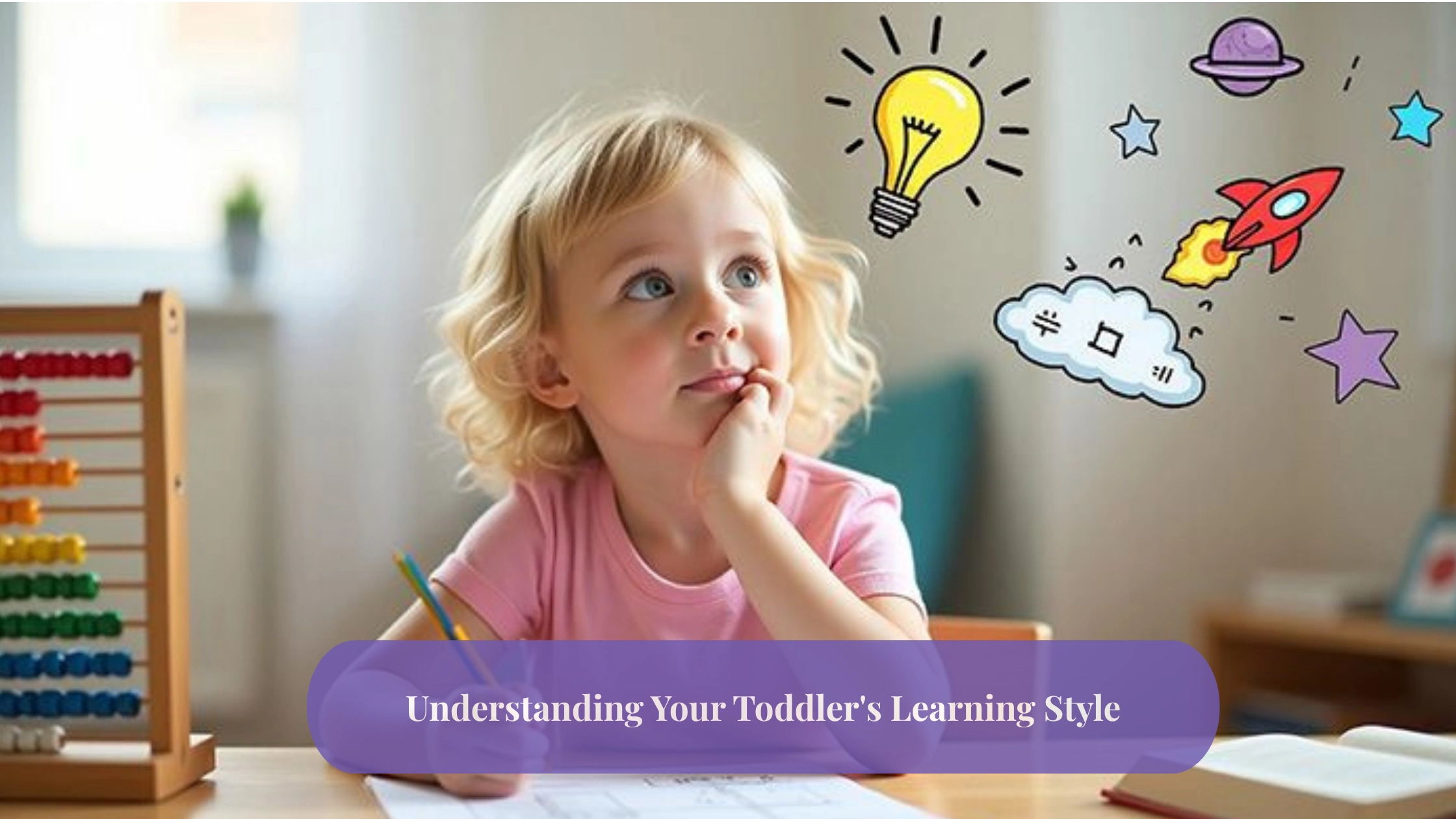
Understanding Your Toddler’s Learning Style helps parents recognize how children naturally explore, understand, and respond to the world around them. Every child learns differently, and enrolling them in a nurturing Preschool in Abu Dhabi allows educators to adapt activities that strengthen their unique abilities while supporting overall development.
1. Why is it important to understand your toddler’s learning style?
How does every child learn differently?
No two children learn in exactly the same way. Some toddlers understand concepts by watching, while others learn best through listening, movement, or hands-on experiences. Recognizing these differences helps parents and teachers create learning opportunities that feel enjoyable rather than overwhelming.
Instead of expecting every child to learn at the same pace, understanding individual learning styles encourages confidence and curiosity. When learning matches a child’s natural interests, they become more engaged and willing to explore new ideas.
Why should learning be personalized?
Personalized learning reduces frustration and allows children to build skills through activities they genuinely enjoy. This approach also helps teachers identify each child’s strengths while providing support where it is needed most.
2. What are the common learning styles in toddlers?
How do visual, auditory, and hands-on learners differ?
Visual learners respond well to pictures, colors, books, and demonstrations. They remember information more easily when they can see it.
Auditory learners enjoy stories, songs, conversations, and verbal instructions. They often learn by listening and repeating information.
Hands-on learners understand concepts by touching, building, experimenting, and moving. Activities involving puzzles, sensory play, and creative projects help them learn effectively.
A quality preschool in MBZ provides a balanced mix of these learning experiences so every child has opportunities to succeed regardless of their preferred learning style.
3. How can parents identify their toddler’s learning style?
What behaviors should parents observe?
Parents can learn a great deal simply by watching how their child naturally plays and solves problems. Does your toddler enjoy picture books? Do they love singing songs? Or do they constantly explore by touching and building?
Observing these preferences helps parents choose activities that encourage development without creating unnecessary pressure.
Why is flexibility important?
Learning styles are not fixed labels. Many toddlers benefit from a combination of visual, auditory, and practical learning experiences as they grow and develop new skills.
4. How do preschools support different learning styles?
Why does a balanced curriculum matter?
A well-designed daycare in Abu Dhabi or preschool understands that children learn through varied experiences. Teachers use storytelling, music, art, sensory play, outdoor exploration, and collaborative activities to ensure every child remains engaged.
Rather than focusing only on academics, effective preschools encourage exploration, creativity, communication, and problem-solving through everyday experiences.
How do teachers adapt learning?
Experienced educators continuously observe children’s progress and adjust teaching methods to suit individual learning needs, helping every child feel included and successful.
5. How does experiential learning strengthen development?
Why do children learn best through experience?
Young children understand concepts more effectively when they actively participate rather than simply listening to explanations. Planting seeds, cooking simple recipes, science experiments, pretend play, and nature exploration allow children to connect learning with real-life experiences.
This closely reflects The Benefits of Experiential Learning in Preschool, where children gain deeper understanding by exploring, questioning, and discovering independently.
How does experiential learning improve confidence?
When children solve simple challenges through hands-on activities, they become more confident in their abilities and develop stronger critical thinking skills.
6. How can parents encourage learning at home?
What simple activities make the biggest difference?
Parents do not need expensive educational materials to support learning. Reading together, asking open-ended questions, singing songs, building with blocks, drawing, gardening, and involving toddlers in simple household tasks all provide meaningful learning opportunities.
These everyday experiences also reinforce Why Early Education Builds Lifelong Learning Habits, helping children develop curiosity, independence, and a positive attitude toward learning that continues throughout life.
Why is positive encouragement essential?
Celebrating effort instead of perfection motivates children to keep exploring, trying new activities, and developing confidence in their own abilities. When parents understand and support their toddler’s unique learning style, children become more engaged, adaptable, and eager to learn both at home and in preschool.


One comment
Pingback: Why Emotional Intelligence Matters in Early Childhood