

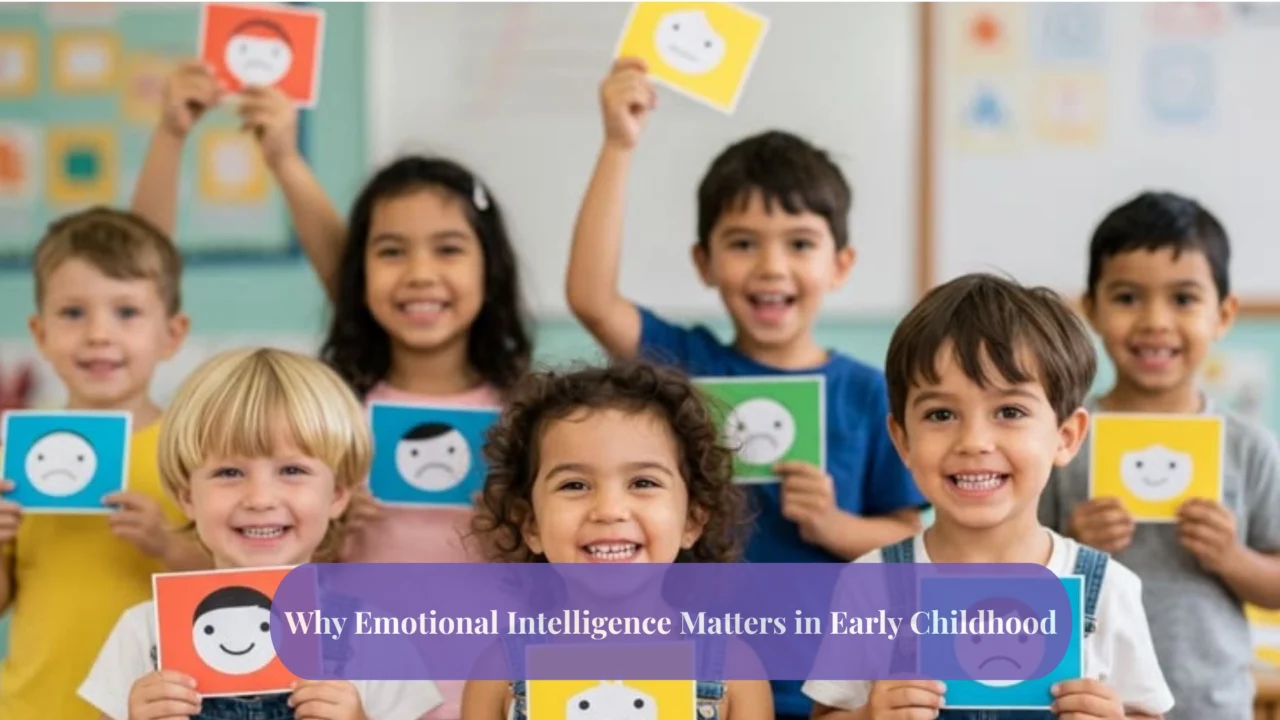
Why Emotional Intelligence Matters in Early Childhood is because young children are still learning how to understand feelings, communicate needs, manage frustration, and build relationships. A nurturing Day Care In Abu Dhabi can provide everyday opportunities for children to develop emotional awareness, empathy, confidence, and healthy social habits through guided play and interaction.
1. What is emotional intelligence in early childhood?
How do young children develop emotional awareness?
Emotional intelligence is a child’s ability to recognize feelings, express emotions appropriately, understand other people’s emotions, and respond to situations in a healthy way. These skills begin developing through everyday experiences long before children can fully explain what they feel.
For example, a toddler who learns to say “I am sad” instead of simply crying is beginning to understand and communicate an emotion. With patient guidance, children gradually learn that every feeling is valid, but not every reaction is appropriate.
2. Why is emotional intelligence important for preschool children?
How does it affect everyday learning?
Children who can manage their emotions are often better able to listen, participate, and cope with small challenges. Emotional skills can also make classroom transitions easier and help children build positive relationships with teachers and classmates.
A quality Best Preschool in Abu Dhabi can support this development through storytelling, group activities, role-play, and guided conversations about feelings.
Emotional development gives children the confidence to participate, communicate, and learn from everyday experiences.
3. How does emotional intelligence improve social skills?
Why is empathy important for young children?
Preschoolers are learning how to share, take turns, cooperate, and understand different perspectives. Emotional intelligence helps them recognize how their actions may affect others.
A child who understands that a friend is upset may learn to offer comfort or give them space. These small interactions gradually build empathy and stronger relationships.
Children also learn how to handle disagreements. Instead of immediately reacting physically or becoming overwhelmed, they can be encouraged to use words, ask for help, and find simple solutions.
4. How can parents encourage emotional intelligence at home?
What can parents do during everyday situations?
Parents can support emotional development through simple conversations. When a child becomes frustrated, instead of dismissing the feeling, parents can acknowledge it and help identify the reason.
For example, saying, “I can see that you’re upset because the toy broke,” gives the child language for their experience. Parents can then guide them toward an appropriate response.
Reading stories together is another effective approach. Discussing how characters feel and asking what the child would do in a similar situation encourages empathy and emotional reasoning.
5. How does understanding a child’s learning style help?
Why should parents observe individual preferences?
Children respond differently to learning experiences. Some enjoy stories and conversations, while others express themselves better through drawing, movement, music, or hands-on activities.
Understanding Your Toddler’s Learning Style can help parents and educators choose activities that encourage natural participation. A child who struggles to explain feelings verbally may communicate more comfortably through pictures, puppets, or pretend play.
This flexible approach allows children to develop emotional skills without feeling pressured.
6. How does emotional intelligence support early education?
What is the connection between emotional and academic development?
Emotional readiness plays an important role in a child’s ability to engage with learning. Children need to feel safe enough to ask questions, make mistakes, and try again.
This connects directly with The Importance Of Early Childhood Education, where learning environments support not only early academic abilities but also communication, independence, social development, and emotional well-being.
A supportive Kids daycare in MBZ can reinforce these skills through consistent routines, positive teacher interactions, and age-appropriate activities.
7. How can teachers strengthen emotional development?
What classroom activities work well?
Teachers can use puppet conversations, storytelling, cooperative games, role-play, and emotion-based picture cards to help children recognize and discuss feelings.
They can also model calm behavior when children become frustrated. Instead of simply correcting unwanted behavior, educators can explain what happened and show children a more appropriate way to respond.
Consistent guidance helps children gradually develop self-control, empathy, and confidence.
8. Why should emotional intelligence be developed early?
How can early emotional skills influence the future?
The emotional habits children develop during their early years can influence how they approach relationships, challenges, and learning as they grow. Teaching children to communicate feelings, listen to others, manage frustration, and show empathy gives them practical skills they can use throughout life.
When parents and educators work together, children receive consistent encouragement across home and school, creating a supportive foundation for healthy emotional and social development.