

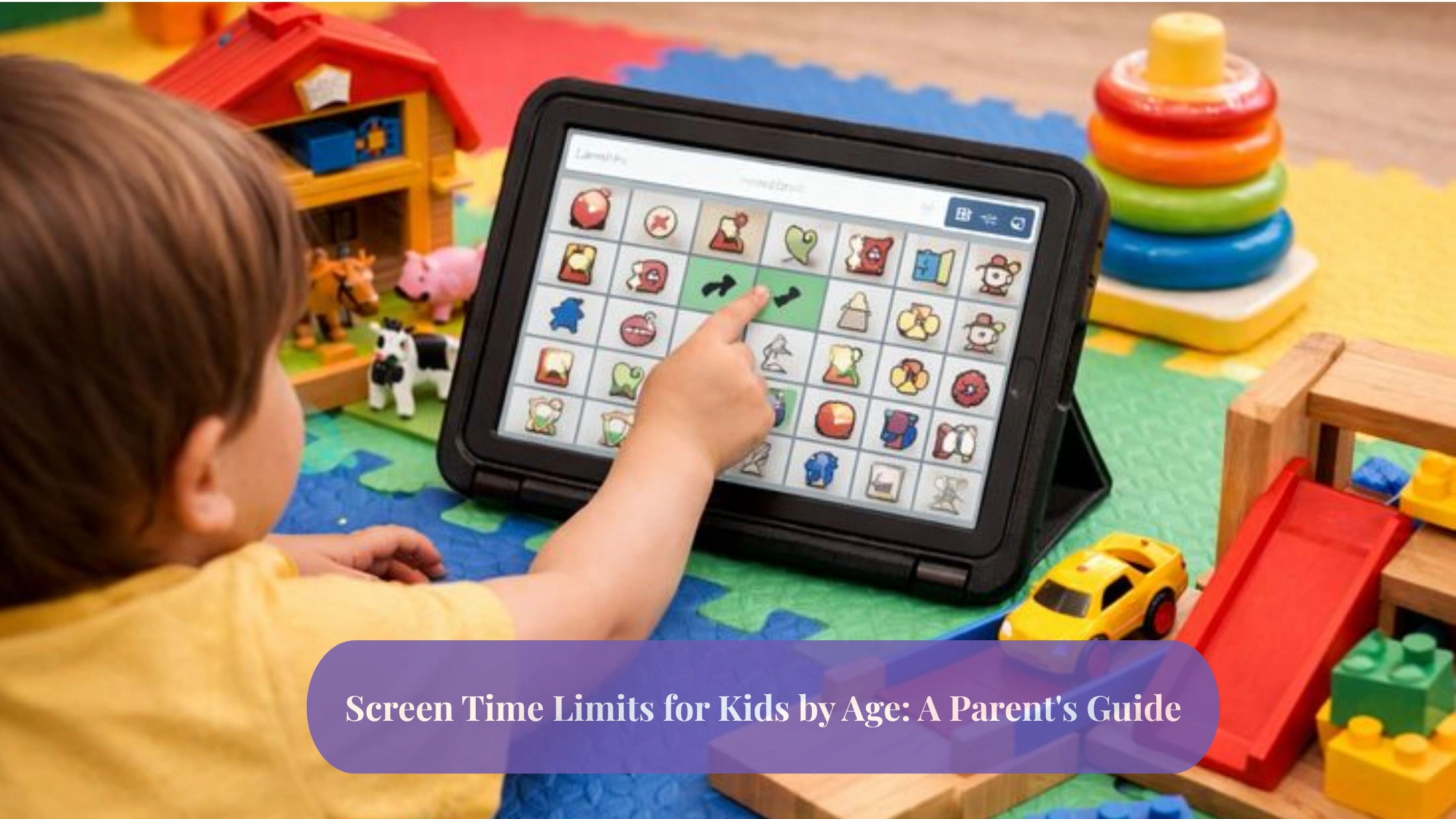
Screen Time Limits for Kids by Age: A Parent’s Guide explains how parents can manage children’s use of televisions, mobile phones, and tablets as they grow. The right limits depend on age and individual needs, but children should always have enough time for sleep, outdoor play, family conversations, and activities that encourage curiosity.
How Much Screen Time Does Your Child Really Need?
A few minutes of cartoons while preparing dinner may seem harmless, and sometimes it helps parents manage a busy day. The challenge is when a phone becomes the first thing a child asks for in the morning or the only way they can settle down when bored.
During the early years, children learn by exploring their surroundings, asking questions, playing with objects, and interacting with other people. Parents looking at a Preschool in Abu Dhabi should consider how the school encourages these experiences alongside any use of digital technology.
What Are the Recommended Screen Time Limits by Age?
For babies younger than 18 months, the American Academy of Pediatrics recommends avoiding screen media apart from video calls. Between 18 and 24 months, parents who introduce digital content should choose high-quality material and watch it with their child.
For children aged 2 to 5, the AAP recommends limiting routine screen use to around one hour a day of high-quality content. The World Health Organization also recommends no more than one hour of sedentary screen time for children aged 2 to 4, with less being better.
For older children, there is no single daily limit that suits every family. What matters is whether screen use starts affecting sleep, physical activity, learning, or relationships.
What Happens When Children Spend Too Much Time on Screens?
Imagine a child who reaches for a phone every time they have to wait, eat, or sit quietly. Over time, they may have fewer opportunities to practise playing independently, talking with others, or finding their own ways to stay occupied.
Another common challenge comes when parents suddenly switch off a video. A child who is absorbed in watching may cry or become frustrated, especially if they were not prepared for the change.
These situations do not mean parents have done something wrong. They are a reminder that young children need help learning when to stop and what to do next.
The aim is to create a healthy balance, not to make parents feel guilty about every minute of screen time.
How Can Parents Make Screen Time Easier to Manage?
Start with rules your family can realistically follow. For example, keep phones away during meals, avoid screens close to bedtime, and decide in advance how long a child can watch a programme.
Give children a little notice before screen time ends. Saying, “Let’s finish this episode, then we’ll build something together,” gives them time to prepare for the change.
It also helps to watch programmes together occasionally. Ask your child what happened, which character they liked, or what they think might happen next. A simple conversation can make viewing more interactive.
When visiting a Best Preschool in Musaffah, parents can ask how teachers balance digital learning with storytelling, creative play, movement, and direct interaction.
What Can Children Do Instead of Watching Videos?
You don’t need to buy new toys or plan complicated activities. Give a child a few blocks and see what they build. Let them draw a picture, water plants with you, help sort laundry by colour, or listen to a favourite story.
Even everyday tasks can become learning opportunities. Counting spoons while setting the table or naming objects during a walk helps children practise language, observation, and early maths.
A quality Kids daycare in Musaffah should provide similar opportunities throughout the day, giving children time to move, play, rest, and interact with others.
These experiences help develop Skills Children Need to Learn at an Early Age, including communication, patience, independence, cooperation, and problem-solving.
How Should Screen Time Rules Change as Children Grow?
As children get older, parents can gradually introduce conversations about online safety, privacy, advertisements, and respectful behaviour. Rather than simply saying no, explain why certain boundaries matter and involve children in setting reasonable routines.
If you’re considering how to choose the best kg for your child, look at how the school supports reading, physical activity, creativity, and social development. A classroom full of digital devices is not necessarily better than one where children learn through practical activities and meaningful conversations.
Pay attention to changes at home, too. If screen use regularly leads to sleep problems, repeated arguments, or less interest in other activities, review the routine and make adjustments. If concerns about behaviour or development continue, speak with a paediatrician.
Healthy screen habits grow from consistent boundaries and the alternatives children are offered. When children have opportunities to play, explore, ask questions, and spend time with their families, technology can remain one part of their lives rather than becoming the centre of them.