
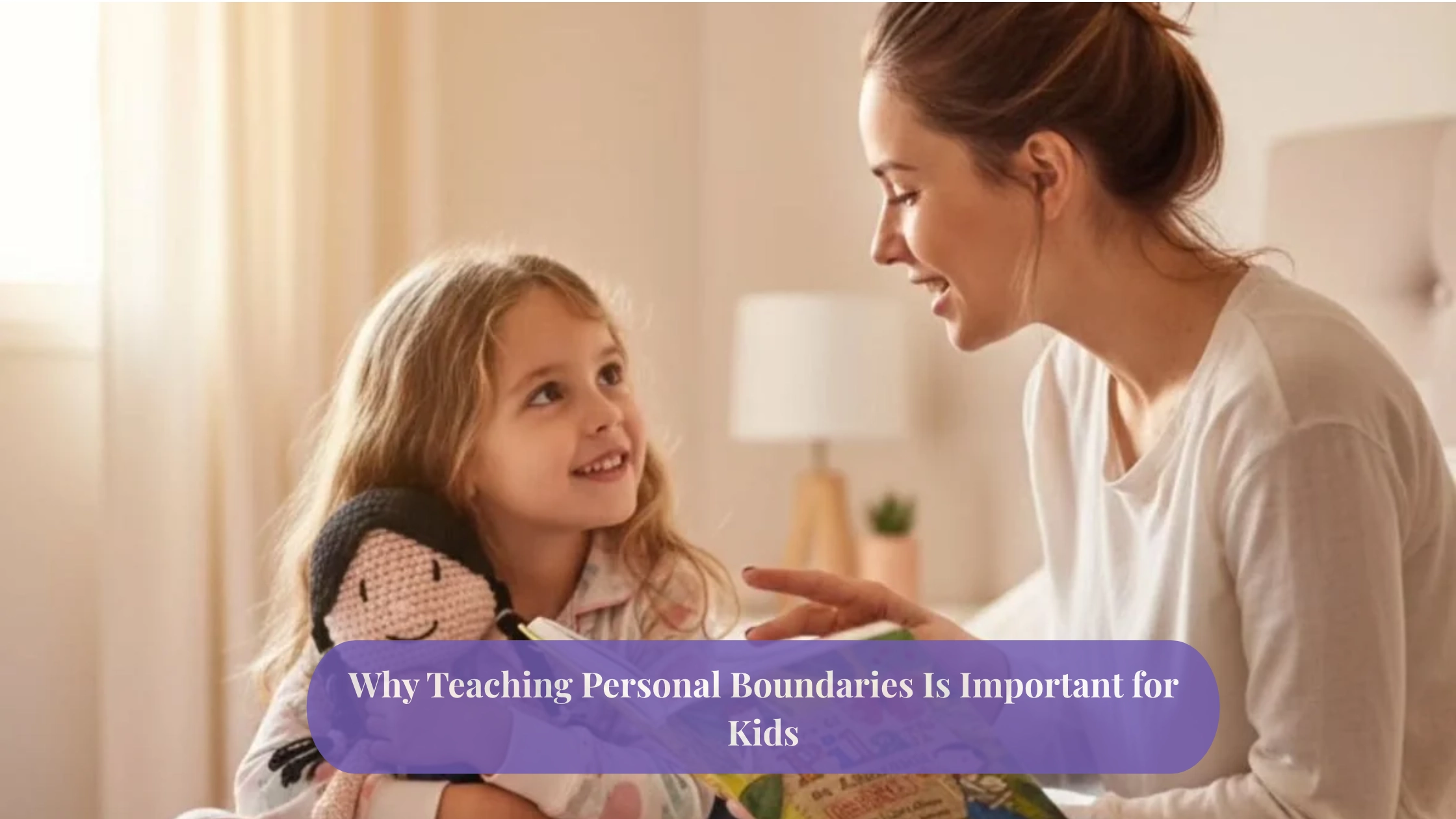
Why teaching personal boundaries is important for kids is closely connected to their safety, confidence, and healthy relationships. A preschool in Abu Dhabi can help children understand personal space, express discomfort, respect others, and say no when necessary, building self-respect and helping them interact safely with people around them.
What Are Personal Boundaries for Children?
Personal boundaries are the limits children learn to set around their bodies, feelings, belongings, and personal space. They help children understand what makes them comfortable and how to communicate when something does not feel right.
For young children, boundaries can be simple. They include knowing that they do not have to hug someone if they do not want to, asking permission before taking another child’s toy, and understanding that everyone deserves personal space.
Parents and teachers play an important role in introducing these ideas through everyday conversations and positive examples. A preschool in Musaffah can support this learning by encouraging children to express their feelings and respect one another during classroom activities.
Why Should Children Learn to Say No?
Teaching children that they can say no helps them understand that their feelings and choices matter. It also gives them the confidence to speak up when they feel uncomfortable, pressured, or unsafe.
For example, if a child does not want to participate in a physical game or hug a relative, adults should respect that decision instead of forcing participation. This teaches children that they have control over their personal space.
However, children should also understand that some instructions from trusted adults are necessary for safety, such as holding a parent’s hand near a road.
The goal is to help children distinguish between healthy guidance and situations that make them feel uncomfortable. Parents should encourage children to speak openly without fear of punishment or embarrassment.
How Can Parents Teach Personal Boundaries at Home?
Children understand boundaries more easily when adults demonstrate them consistently. Parents can start with simple habits during daily routines.
For instance, knock before entering a child’s room, ask before using their belongings, and respect their preferences when appropriate. These actions show children that boundaries apply to everyone, regardless of age.
Parents should also teach the difference between safe and unsafe secrets. Children should know that they can always tell a trusted adult if someone asks them to hide something that makes them uncomfortable.
Avoid using fear-based conversations. Instead, use simple language and familiar examples. Practice phrases such as “Please stop”, “I don’t like that”, and “I need help”.
Children are more likely to communicate confidently when adults listen calmly and take their concerns seriously.
How Can Preschool Activities Help Children Understand Boundaries?
Group activities give children regular opportunities to practise respecting personal space, sharing resources, waiting for turns, and communicating their needs.
For example, role-playing games can teach children how to respond when someone takes their toy without asking. Storytelling can introduce situations involving personal space, while group play encourages cooperation and mutual respect.
A Best Preschool in Musaffah should create a supportive environment where children feel comfortable expressing themselves and teachers respond positively to their concerns.
Understanding How Preschool Activities Prepare Children for Real Life Situations also highlights the value of practical experiences. When children practise these behaviours during everyday activities, they gradually learn to apply them outside the classroom.
What Personal Boundary Skills Should Children Learn at an Early Age?
The Skills Children Need to Learn at an Early Age include recognising emotions, expressing discomfort, respecting personal space, asking permission, and understanding that other people’s boundaries matter too.
Children should also learn that they can approach a trusted adult whenever they feel confused or unsafe. It is helpful to identify several trusted adults rather than relying on only one person.
At a Kids daycare in Musaffah, teachers can reinforce these skills through supervised play, classroom conversations, stories, and positive daily interactions.
How Can Parents and Teachers Work Together?
Children develop stronger habits when the same messages are reinforced at home and in their learning environment. Parents can speak with teachers about how personal boundaries are introduced and how uncomfortable situations are handled.
Teachers should model respectful communication, avoid forcing physical affection, and give children opportunities to express their preferences. Parents can continue these conversations through everyday examples at home.
Teaching personal boundaries is not about making children fearful of others. It is about helping them feel confident, respected, and safe. With consistent guidance from parents and educators, children can develop healthy relationships while learning to respect both their own limits and those of others.