

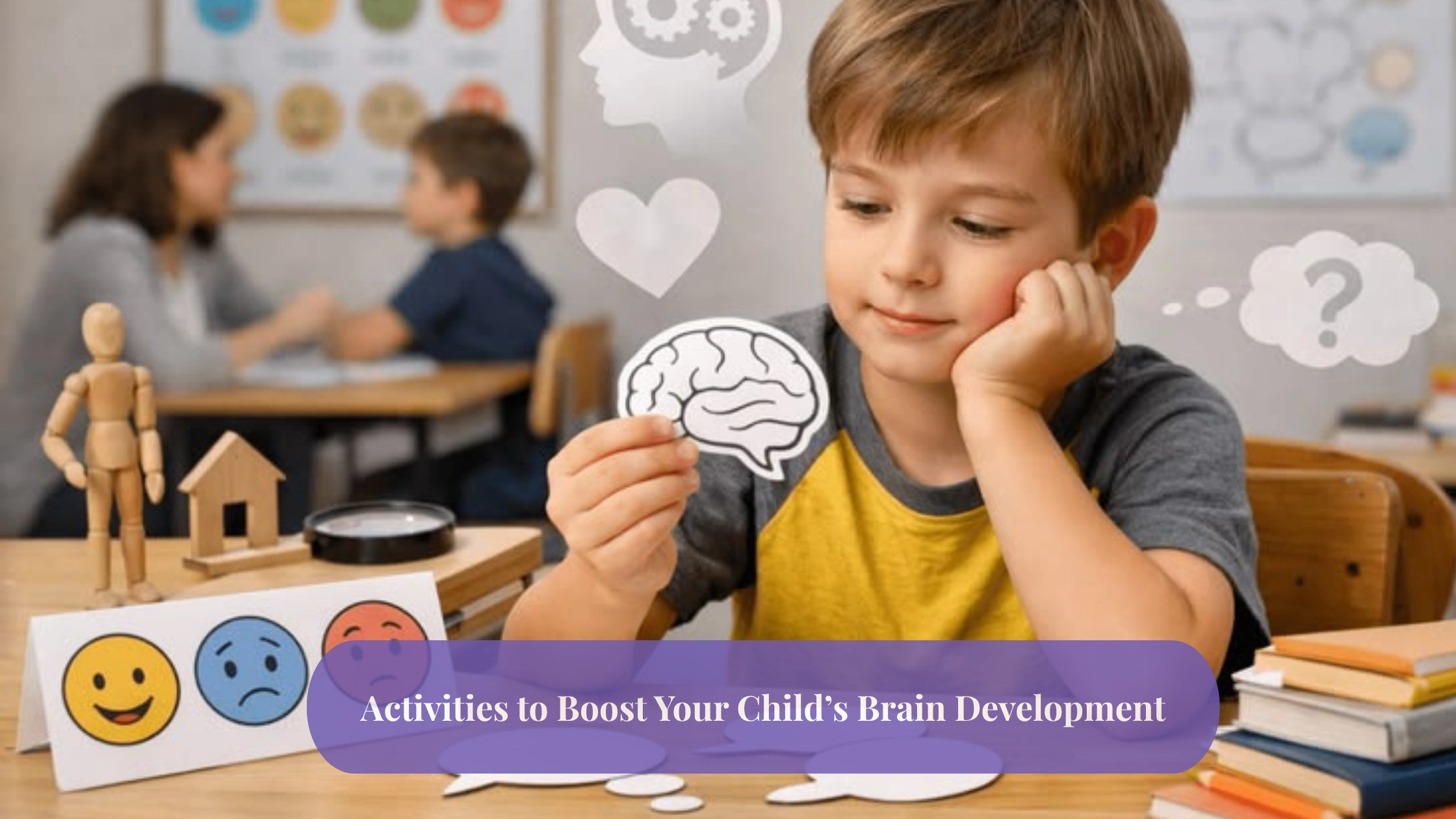
Activities to Boost Your Child’s Brain Development focus on improving memory, creativity, problem-solving, and communication through engaging daily experiences. Enrolling children in a supportive Day Care In Abu Dhabi environment combined with interactive activities at home helps strengthen cognitive growth and builds a strong foundation for lifelong learning.
1. Why are brain development activities important in early childhood?
How does the brain grow during early years?
A child’s brain develops rapidly during the first few years of life. Experiences during this stage directly influence learning ability, emotional development, and social skills.
A structured learning environment like the Best Preschool in Abu Dhabi encourages activities that stimulate curiosity, imagination, and independent thinking. These experiences help children absorb information more effectively while developing confidence in learning.
2. What activities help improve memory and concentration?
Reading and storytelling
Reading stories regularly improves language development, listening skills, and memory retention. Asking children questions about the story encourages active thinking.
Matching and memory games
Simple activities like matching cards or identifying patterns strengthen focus and visual memory. These games also improve attention span in a fun and engaging way.
Music and rhythm activities
Songs and rhythm-based games stimulate different parts of the brain while improving memory and coordination.
3. How do creative activities support brain development?
Drawing and painting
Creative expression through art improves imagination and fine motor skills. It also helps children express emotions and ideas confidently.
Pretend play and role-playing
Children learn problem-solving and communication through imaginative play. Activities like pretending to be a doctor, teacher, or shopkeeper stimulate creativity and social understanding.
In a nurturing Kids daycare in MBZ, such activities are often integrated into daily learning routines to encourage cognitive and emotional growth.
4. How can problem-solving activities strengthen thinking skills?
Puzzles and building blocks
Activities involving puzzles, blocks, or sorting games challenge children to think critically and make decisions independently.
Why independent thinking matters
These experiences directly support concepts from How to Develop Problem-Solving Skills at Early Age, where children learn to analyze situations and explore solutions through hands-on activities.
Problem-solving strengthens confidence because children experience success through their own efforts.
5. How does preschool support long-term brain development?
Why structured learning environments matter
Preschool environments expose children to guided learning experiences that support both cognitive and emotional growth.
This aligns closely with How Preschool Prepares Children for Future Education, where children develop communication, social interaction, discipline, and independent learning habits that support future academic success.
How do routines improve learning?
Consistent routines help children feel secure and improve focus, which enhances overall learning ability.
6. How can parents support brain development at home?
Encourage curiosity and exploration
Allow children to ask questions, explore nature, and participate in daily activities like cooking or organizing toys.
Balance learning with play
Children learn best through enjoyable experiences. Combining play with learning activities creates stronger engagement and retention.
The right balance of guided learning, imaginative play, and supportive interaction helps children build confidence, curiosity, and strong thinking abilities. With encouragement from both parents and educators, children develop the cognitive skills needed for lifelong learning and future success.