
How Preschool Activities Improve Social Skills in Toddlers is closely connected to group interaction, communication, and guided play experiences. Enrolling children in a structured preschool in MBZ helps toddlers learn sharing, cooperation, emotional expression, and confidence, all of which are essential for healthy social development and future learning success.
1. Why are social skills important during toddler years?
How do social skills shape early development?
Social skills help toddlers communicate, express emotions, and build relationships with others. During early childhood, children begin learning how to interact in group settings, follow instructions, and understand feelings.
A nurturing preschool in Abu Dhabi creates opportunities for children to interact daily through games, storytelling, and classroom activities. These experiences help toddlers become more confident and comfortable around others.
Why is early interaction necessary?
Children who develop social skills early often adjust better to school environments and group learning situations later in life.
2. How do preschool activities encourage communication?
What role does group play have?
Activities like singing, role-playing, and storytelling encourage toddlers to communicate with peers and teachers. These interactions improve listening skills, vocabulary, and self-expression.
How does this improve confidence?
When children are encouraged to participate and share ideas, they become more comfortable speaking in social situations. This directly supports concepts related to How To Develop Social Skills in Children, where communication grows through regular interaction and encouragement.
3. How do preschool routines teach cooperation?
Why do shared activities matter?
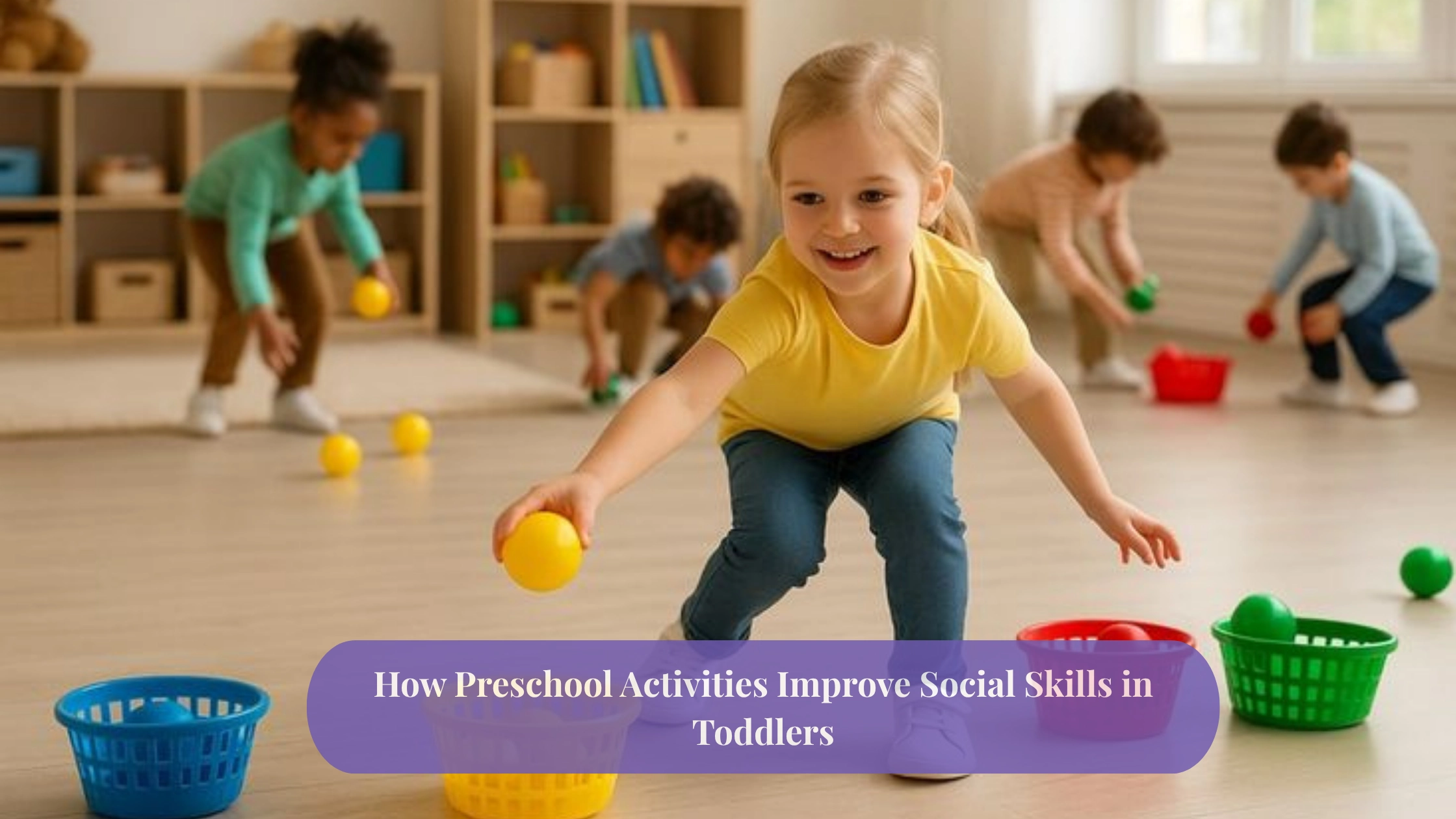
Preschool classrooms involve teamwork through art projects, games, and group learning. Toddlers gradually learn patience, sharing, and respect for others during these activities.
In a supportive best Nursery in Musaffah, teachers guide children through positive social interactions while helping them understand acceptable behavior and emotional control.
How do routines create discipline?
Daily routines help toddlers understand structure and responsibility, making them feel secure and confident in social environments.
4. How do preschool activities prepare toddlers for future education?
What long-term benefits do children gain?
Preschool social experiences prepare children for structured school environments by teaching them how to communicate, collaborate, and adapt to classroom expectations.
This aligns closely with How Preschool Prepares Children for Future Education, where emotional readiness and social confidence become essential for future academic success.
Why does emotional development matter?
Children who can express emotions and interact positively with others often perform better academically because they feel more comfortable participating in learning activities.
5. How can parents support social skill development at home?
What simple practices help toddlers?
Parents can encourage social development by arranging playdates, involving children in conversations, and teaching polite communication through daily interactions.
Why should children observe positive behavior?
Toddlers learn by watching adults. When parents model kindness, patience, and respectful communication, children naturally begin copying those behaviors.
Conclusion
Preschool activities play a vital role in helping toddlers develop strong social skills through communication, teamwork, and guided interaction. These early experiences help children become more confident, emotionally aware, and comfortable in group settings. With support from both parents and preschool educators, toddlers build the social foundation needed for future learning and healthy relationships.