

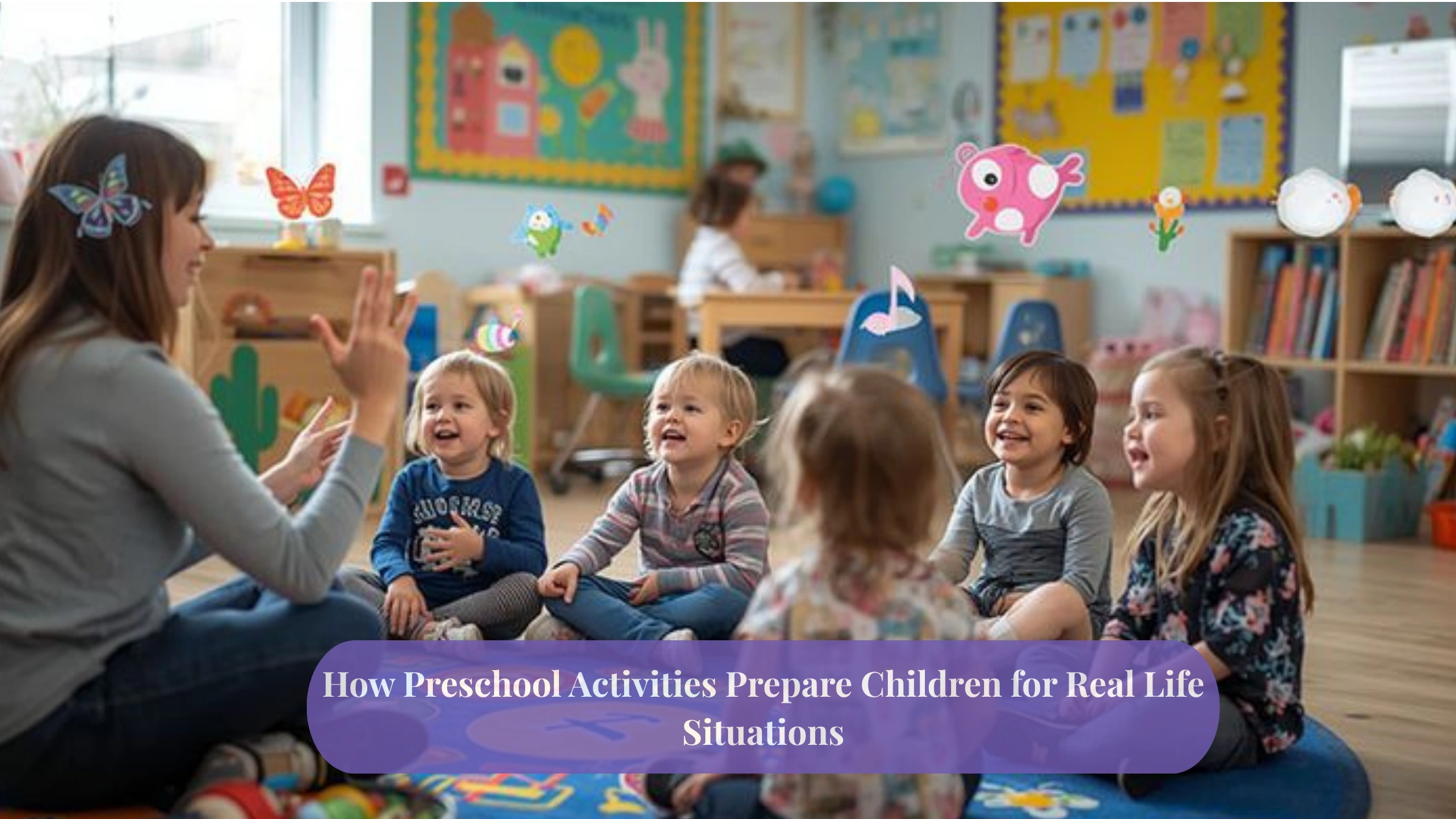
How Preschool Activities Prepare Children for Real Life Situations is by giving children opportunities to communicate, make choices, solve simple problems, cooperate, and become independent. A nurturing preschool in Abu Dhabi uses play, routines, role-play, and hands-on activities to help children practice practical skills in situations that feel natural and enjoyable.
1. How do preschool activities teach children independence?
What everyday tasks help children become independent?
Preschool activities often involve simple responsibilities that children can manage themselves. Putting away toys, washing hands, organizing belongings, choosing an activity, or helping clean up teaches children that they can contribute to their environment.
These small responsibilities gradually build confidence. Instead of immediately helping with every task, teachers can give children time to try, make mistakes, and try again.
This is an important part of the Skills Children Need to Learn at an Early Age, because independence helps children handle everyday situations with greater confidence.
2. How does role-play prepare children for real situations?
Why is pretend play useful?
Role-play allows children to practice situations they may encounter in everyday life. A classroom might become a shop, clinic, restaurant, or home, allowing children to take different roles and communicate with one another.
For example, playing “shop” can teach children how to ask for something, listen to another person, take turns, and make simple decisions. These experiences help children understand social situations without the pressure of experiencing them for the first time in real life.
A Best Preschool in Shabiya 9 can use role-play to make practical learning engaging while developing communication and confidence.
3. How do group activities teach children teamwork?
What do children learn by working together?
Group activities teach children that they do not always have to work alone. Building a structure together, completing a classroom art project, or participating in a group game requires children to communicate and cooperate.
They learn to listen to different opinions, share materials, wait for their turn, and work toward a common goal.
These experiences are particularly useful because teamwork is an important part of school, family life, and future workplaces.
4. How do preschool activities develop problem-solving skills?
Why should children solve simple problems themselves?
Preschool activities naturally create small challenges. A puzzle may have a missing piece, a block tower may fall, or children may need to decide how to share limited materials.
Rather than providing an immediate solution, teachers can ask questions such as, “What could we try next?” or “How can we make this work?”
This encourages children to think independently, consider different options, and learn from mistakes.
5. How does preschool help children understand emotions?
What can children learn through social situations?
Children regularly encounter situations involving excitement, disappointment, frustration, and disagreement. Guided activities give teachers opportunities to help children recognize and express these emotions appropriately.
Storytelling, puppet play, and group conversations can help children understand how others may feel. Learning to say “I’m upset,” ask for help, or apologize after a disagreement gives children practical emotional tools.
Parents can also support this development by talking openly about feelings at home.
6. How can activities be adapted to each child’s learning style?
Why does every child need a different approach?
Children do not all respond to activities in the same way. Some enjoy drawing and visual demonstrations, while others prefer movement, music, conversation, or hands-on exploration.
Understanding Your Toddler’s Learning Style helps parents and educators choose activities that encourage participation without forcing every child to learn in exactly the same way.
A KG in MBZ can build on these early experiences by providing more structured opportunities for communication, decision-making, and independent learning.
7. How can parents continue practical learning at home?
Which everyday activities can parents use?
Parents can turn ordinary routines into learning opportunities. Asking children to help sort laundry, choose between two outfits, organize toys, prepare simple snacks, or decide which book to read encourages responsibility and decision-making.
Children do not need complicated lessons to develop real-life skills. Simple, age-appropriate responsibilities repeated consistently can make everyday learning meaningful and enjoyable.


One comment
Pingback: How to Build Healthy Eating Habits in Preschool Children